Qi Blends, Chinese Herbs for Dogs

Articles & Success Stories about Herbal Remedies for Dogs

About Chinese Herbs

About Chinese Herbs
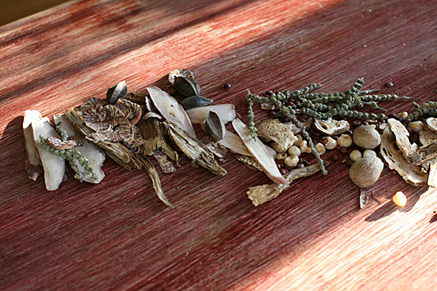
Chinese herbal medicine has been used in the treatment of humans and animals for over 2,000 years. It is based on combining herbs together to promote balance and healing. We call our herbal formulas “Qi Blends” since they are blended together to promote health and restore harmony to the “Qi” (or vital energy) of dogs.

The aim of any treatment with Chinese herbs is to bring the body and emotions into balance. We’ve identified the areas of imbalance that most often lead to health problems in dogs and chosen herbs to address them.

Balance is achieved in Chinese medicine by addressing:

Yin & Yang –
Yin and Yang are opposites. Symptoms can be looked at in terms of yin/yang parameters. For example, dampness is yin and dryness is yang. Cold is yin and heat is yang. An herbalist’s job is to apply the theories of yin and yang to the patient. For a dog with sores on the skin – are they wet looking or dry? Are they red (indicating heat) or white (indicating cold)? Similarly with a cough – does it sound wet and phlegmy or dry? Is the dog hyperactive (indicating heat) or lethargic (indicating cold)?

Qi, Blood, and Body Fluids –
Qi (vital energy), blood, and body fluid are fundamental substances that sustain health. Imbalances in these three areas can cause a variety of imbalances for a dog. Qi, blood, and body fluids can be weak and deficient, in which case they are unable to nourish the body and function properly. Deficient qi can cause fatigue or dull achey pain. Deficient blood and body fluids can lead to dry, itchy skin. On the other hand – qi, blood and body fluids can be excess and overflowing in which case they become stuck or stagnant. Qi and blood that are stuck can cause a sharp, fixed pain that may be severe. On the emotional side, stuck qi can cause frustration and irritability. To attain balance, these three vital substances need to be strong and healthy in their flow.

Channels and Collaterals –
The channels and collaterals are considered to be a series of connecting passages through which qi and blood flow. The primary channels are indicated by the lines that are shown on acupuncture charts such as the one shown below. (insert chart pic) Eleven of the 12 primary channels are named for organs they are associated with. It’s important to note that these organs in Chinese medicine are not the same as their western counterparts. The Chinese Kidney, for example, may have some of the same functions as the western Kidney, but it is a much broader concept than simply the anatomical organ. Chinese organs have emotions associated with them. The Chinese kidney is associated with fear. They also have an associated tissue and orifice. The tissue of the Chinese kidney is bone and the orifice is the ear. Therefore, hearing problems, brittle bones, and a feeling of fear indicate imbalance in the Kidney meridian. The anatomical kidney may be perfectly healthy in this scenario, but herbs are required to treat the Kidney meridian.

If you go to www.qiblends.com, click on “Our Blends” for a detailed description of each blend. Here we describe how the above theories apply to each product. Instead of treating a disease or symptom with just one medication, our blends treat the dog as a whole. The treatment principles explain how the blend uses herbs to balance the yin, yang, qi, blood, and body fluids, as well as the channels and associated organs. We find that the balance and interaction of all the ingredients together are more important than the effect of each ingredient on its own.

Why Choose Chinese Herbs for Dogs?

Chinese HerbsChinese herbal medicine has been used in the treatment of humans and animals for over 2,000 years. It is based on combining herbs together to promote balance and healing. We call our herbal formulas “Qi Blends” since they are blended together to promote health and restore harmony to the “Qi” (or vital energy) of dogs.

The aim of any treatment with Chinese herbs is to bring the body and emotions into balance. We’ve identified the areas of imbalance that most often lead to health problems in dogs and chosen herbs to address them.
Balance is achieved in Chinese medicine by addressing:
• Yin & Yang –
Yin and Yang are opposites. Symptoms can be looked at in terms of yin/yang parameters. For example, dampness is yin and dryness is yang. Cold is yin and heat is yang. An herbalist’s job is to apply the theories of yin and yang to the patient. For a dog with sores on the skin – are they wet looking or dry? Are they red (indicating heat) or white (indicating cold)? Similarly with a cough – does it sound wet and phlegmy or dry? Is the dog hyperactive (indicating heat) or lethargic (indicating cold)?
• Qi, Blood, and Body Fluids –
Qi (vital energy), blood, and body fluid are fundamental substances that sustain health. Imbalances in these three areas can cause a variety of imbalances for a dog. Qi, blood, and body fluids can be weak and deficient, in which case they are unable to nourish the body and function properly. Deficient qi can cause fatigue or dull achey pain. Deficient blood and body fluids can lead to dry, itchy skin. On the other hand – qi, blood and body fluids can be excess and overflowing in which case they become stuck or stagnant. Qi and blood that are stuck can cause a sharp, fixed pain that may be severe. On the emotional side, stuck qi can cause frustration and irritability. To attain balance, these three vital substances need to be strong and healthy in their flow.
• Channels and Collaterals –
The channels and collaterals are considered to be a series of connecting passages through which qi and blood flow. The primary channels are indicated by the lines that are shown on acupuncture charts such as the one shown below. Eleven of the 12 primary channels are named for organs they are associated with. It’s important to note that these organs in Chinese medicine are not the same as their western counterparts. The Chinese Kidney, for example, may have some of the same functions as the western Kidney, but it is a much broader concept than simply the anatomical organ. Chinese organs have emotions associated with them. The Chinese kidney is associated with fear. They also have an associated tissue and orifice. The tissue of the Chinese kidney is bone and the orifice is the ear. Therefore, hearing problems, brittle bones, and a feeling of fear indicate imbalance in the Kidney meridian. The anatomical kidney may be perfectly healthy in this scenario, but herbs are required to treat the Kidney meridian.

Dogs with Digestive Problems – What does Chinese Medicine Say?

Chinese medicine teaches that healthy digestion depends on the proper functioning of the Spleen and Stomach. (As a reminder, organs in Chinese medicine are not the same as the organs of Western medicine. The Chinese “Spleen” has very little to do with the anatomical spleen.)

The Spleen and Stomach make up a yin/yang pair. The Stomach’s job is to “rot and ripen” food. This separates the pure essences of food (which become energy) from the turbid waste (which is excreted). The Spleen transforms the food into energy (or Qi) and transports this Qi throughout the body.

Digestive problems occur when the Stomach and Spleen aren’t functioning as they should. The Qi of the Stomach can become rebellious and flow upward leading to nausea and vomiting. Heat in the Stomach meridian causes foul smelling breath. Weakness in the Qi of the Spleen can lead to a build-up of turbid dampness that causes flatulence, bloating, or loose stools. Food can also become stuck or stagnant when the Spleen Qi is weak leading to loss of appetite, abdominal discomfort or pain, and bad breath.

It is common that a diet heavy in rich and fatty foods (like many commercial dog foods) damages the Qi of the Spleen and Stomach. Eating a healthy diet is crucial to restore good health.

Qi Blends Digestive Blend is a formulation of herbs that address the most common dysfunctions of the Spleen and Stomach seen in dogs.

Here’s what one of our customers wrote -

“Our Lab, Max, used to have loose stools and bad flatulence all the time. We tried switching foods several times, but finally found relief when we discovered Qi Blends Digestive Blend. We used to be embarrassed when we had friends over and Max was in the house passing gas. Dealing with the pooper scooper was also a pain. Now, thanks to
Digestive Blend, we’re much happier — and so is Max!”

Gracie

Gracie

Gracie’s Joint Pain and Chinese Herbs

My first case study is about Gracie, a dog near and dear to my heart. Gracie is prone to getting joint pain – particularly in her knees and hips. At times she hobbles on three legs, unable to put any weight on her hind leg.

From a Chinese medicine perspective Gracie suffers from “Bi pain.” The translation of “Bi pain” is painful obstruction. When a dog has pain and stiffness in the muscles, tendons, bones, or joints, it falls into this category. Pain from arthritis is largely looked at as “bi pain” in Chinese medicine.

According to the theories of Chinese medicine, the factors that cause “bi pain” are wind and dampness. Change in the location of pain indicates wind. Heaviness, swelling, or numbness indicate dampness. Wind and dampness will commonly combine with either heat or cold.

Gracie was treated with Qi Blends Joint & Muscle blend. Qi Blends is the line of Chinese herbs that I created specifically for dogs. We’ve launched with 12 blends – 10 internal blends which are mixed with food. Two of the blends are topical – an ointment for itching and a powder for hots spots and sores.

Gracie does very well with Joint & Muscle blend, which has the primary function of treating “bi pain”. After taking the herbs for several days, she began to run and play with youthful vigor. For the most part she appears to be pain free. Since joint pain is Gracie’s weakness, it will sometimes creep back up on her. But when it does re-emerge, a few doses of Joint & Muscle blend is all it takes to take care of it.

© Qi Blends, Chinese Herbs for Dogs